
Pafford Land & Home provides land grading services in Gilmer, TX and nearby communities within about a 40-mile radius. We help local property owners improve drainage, create a more usable surface, and prepare land for the next phase of the project.
Land grading is the process of shaping and leveling the ground to ensure proper drainage, stability, and usability. It involves moving soil, filling low spots, and creating slopes that direct water away from structures, roads, and other areas where pooling or erosion could cause problems. Proper grading is essential for construction, landscaping, pasture management, and long-term property maintenance, helping your land perform as it should for years to come.
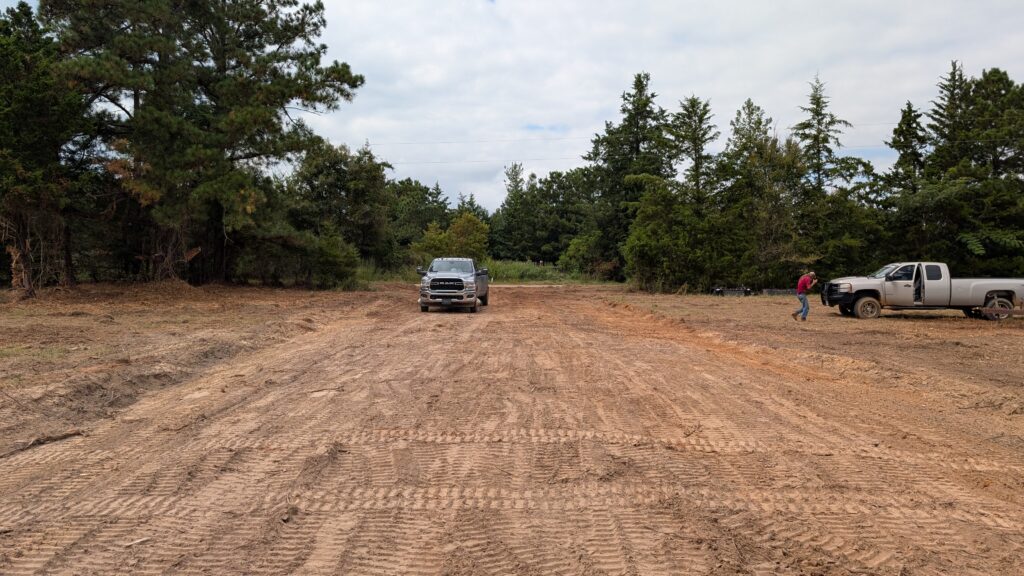
Every grading job begins with understanding your goals and the drainage outcomes needed for your property.
We methodically move and shape soil using the right equipment, and on jobs following land clearing, we can transition directly to grading to save time.
We provide a free estimate and discuss your project in detail to ensure your land is graded properly for long-term results.
Leveling means making the ground flat. Grading means shaping the ground to a specific slope or contour — which may or may not be flat. For drainage purposes, you actually want a slight grade so water moves away from structures. When we talk about grading, we mean shaping the land intentionally for the purpose it needs to serve.
In most cases, yes. Even if the land looks reasonably flat, there’s almost always prep work needed to get the ground truly stable and properly sloped for drainage. Building on improperly graded land can lead to foundation issues, water intrusion, and road damage over time. It’s much easier to address before construction than after.
Yes. We can come in after clearing work has been done by another contractor and handle the grading from there. Just make sure the land is clear enough for our equipment to move through it safely.
Sloped and uneven terrain is what grading is specifically designed for. We assess the topography and the intended use of the land, then work the grade in a way that manages water flow and provides a stable surface. The approach varies depending on how significant the slope is and what the land will be used for.
Often yes. If you have standing water, erosion, or water intrusion near a structure, regrading the surrounding area to direct water away from the problem zone can help significantly. It depends on the specific layout of your property — we’ll assess it and tell you honestly what regrading can and can’t fix.